The Dream of Dark Factories in Software #
There is a big trend in tech right now. People talk about the dark factory in software development. In physical manufacturing, a dark factory runs without humans and without lights.
Now, companies like MindStudio write about this for code. They want a system where a specification goes in and working code comes out. No developer reviews the code. No human is in the loop.
This works for some things. If you update database logic, manage infrastructure, or do simple security patches, more automation is fine because the blast radius is small. We still review the results. But software is not just backend. In my area, we build interfaces for real users. For consumers. This is where the dark factory is a horrible thought.
Why User Interfaces Need Empathy #
A machine can write code, but it does not have empathy. If AI agents build all user interfaces, they will soon look identical. They will look like boring templates or generic publications. The brand and its unique feeling will get lost.
Also, we must think about real human situations. Some people cannot speak. In public banking, you cannot talk to your phone.
AI agents only check the things they are programmed to check. They do not understand physical human limits. Gathering user needs, understanding legal rules, and planning for accessibility is hard. The dreamers of the dark factory often forget this.
The Problem with AI and Accessibility #
When AI writes frontend code, it often makes mistakes with accessibility. AI learns from the average website on the internet. But most websites on the internet are not accessible.
Because of this, AI code often lacks proper semantic HTML. It misses important ARIA labels. If we let AI agents deploy code directly to users, we will exclude millions of people. The systems will be biased and difficult to use for people with disabilities.
How We Use Automation Today #
My teams and I have worked with high automation for a long time. We use modern tools to make our workflows fast.
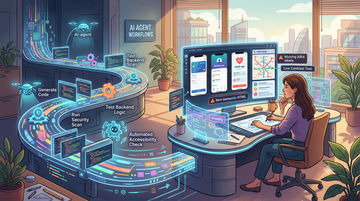
We have agents that read Jira tickets and plan tasks. We run automated gates before we commit any code. Today, we have special agents for code quality, accessibility, security, and performance. Our pipelines run security checks and user interaction tests. Nobody does these steps manually.
This feels like a dark factory because it is automated. But the human is still in control. We review the results and we make the final decisions.
Humans Must Stay in the Loop #
If we remove the human completely, we will build biased systems. We must use automation to help us with mechanical tasks, but not to replace human judgment.
The pipeline can be dark, but the design must stay human.
Resources #
- What Is a Dark Factory Codebase? The Future of Autonomous Software Development
- The Dark Factory Pattern: Moving From AI-Assisted to Fully Autonomous Coding
- AI Coding Gap: Dark Factories and Why Your AI Strategy Is Failing in 2026
- Slop review with AI: the dark factory
- The Gravity Between You and the 100X Dark Factory
Comments
Comments are hosted by EchoThread. Loading them connects your browser to their servers in the US. Details in the privacy notice.